Colorado What To Do›Regions›Central High Country
The Central High Country
The ski towns, the fourteeners and the Arkansas River, all within a few hours of Denver, and most of them above 8,000 feet.
What are the best things to do in Colorado's high country?
The central high country covers Summit County (Breckenridge, Keystone, Copper Mountain, Frisco and Dillon), Vail and Beaver Creek, Leadville and Mount Elbert, Aspen and the Maroon Bells, and the Arkansas Valley towns of Buena Vista and Salida. Highlights include skiing in winter, the Maroon Bells and Independence Pass in summer and fall, fourteener hikes, and whitewater rafting through Browns Canyon.
This is the Colorado on the brochures: ski runs above timberline, old mining towns turned resort towns, and more peaks over 14,000 feet than anywhere else in the state.
It is also the region where altitude matters most. Breckenridge sits at about 9,600 feet and Leadville at 10,152 feet, the highest incorporated city in the United States. Visitors who drive straight from sea level to a high-country hotel often feel it the first night. Spending a night on the Front Range first, drinking more water than usual and keeping the first day easy all help.
Summit County
Summit County: Four Resorts And A Reservoir
About 90 minutes west of Denver on Interstate 70 (more on a busy weekend), Summit County packs four ski areas, Breckenridge, Keystone, Copper Mountain and Arapahoe Basin, around Dillon Reservoir.
Breckenridge is a Victorian mining town with a long Main Street of restored buildings, a free town bus, and a ski area rising directly behind it. In summer, the town's trail network and the gondola from town make it a good base for hiking and mountain biking. Frisco and Dillon are smaller, more affordable towns on the reservoir, with marinas and a paved recreation path that links the county's towns. Arapahoe Basin, on the climb toward Loveland Pass, is known for one of the longest ski seasons in the state.
Do not skip Loveland Pass, on U.S. 6 at 11,990 feet, for a quick taste of the alpine above the Eisenhower-Johnson Memorial Tunnel.
Vail Valley
Vail And Beaver Creek
Vail was built in the 1960s as a Tyrolean-style ski village and grew into one of the largest ski mountains in North America, known for its Back Bowls. In summer, the pedestrian village hosts concerts at the Gerald R. Ford Amphitheater, the Betty Ford Alpine Gardens next door, and gondola rides to hiking and biking trails. Beaver Creek, a few miles west, is a smaller, upscale resort village.
East of Vail, the drive over Vail Pass on I-70 has a paved recreation path climbing alongside it, popular with cyclists.
Leadville and Twin Lakes
Leadville: Fourteeners And Mining History
Leadville was once one of the richest silver towns in the world, and its Harrison Avenue still looks the part. The National Mining Hall of Fame and Museum tells the story, and the town is a base for the area's fourteeners. Mount Elbert, the highest peak in Colorado at 14,440 feet, and Mount Massive rise just to the southwest. Mount Elbert's standard trails are non-technical but long and steep, with more than 4,000 feet of climbing. Start before dawn and be off the summit by early afternoon.
South of Leadville, Twin Lakes sits under the peaks at the foot of Independence Pass, one of the prettiest drives in the region.
Aspen and Independence Pass
Aspen, The Maroon Bells And The Pass
Independence Pass, on Colorado Highway 82 between Twin Lakes and Aspen, crosses the Continental Divide at 12,095 feet. It is narrow, winding and closed in winter, usually from early November to late May. Vehicle length limits apply. Check COtrip.org for opening and closing dates.
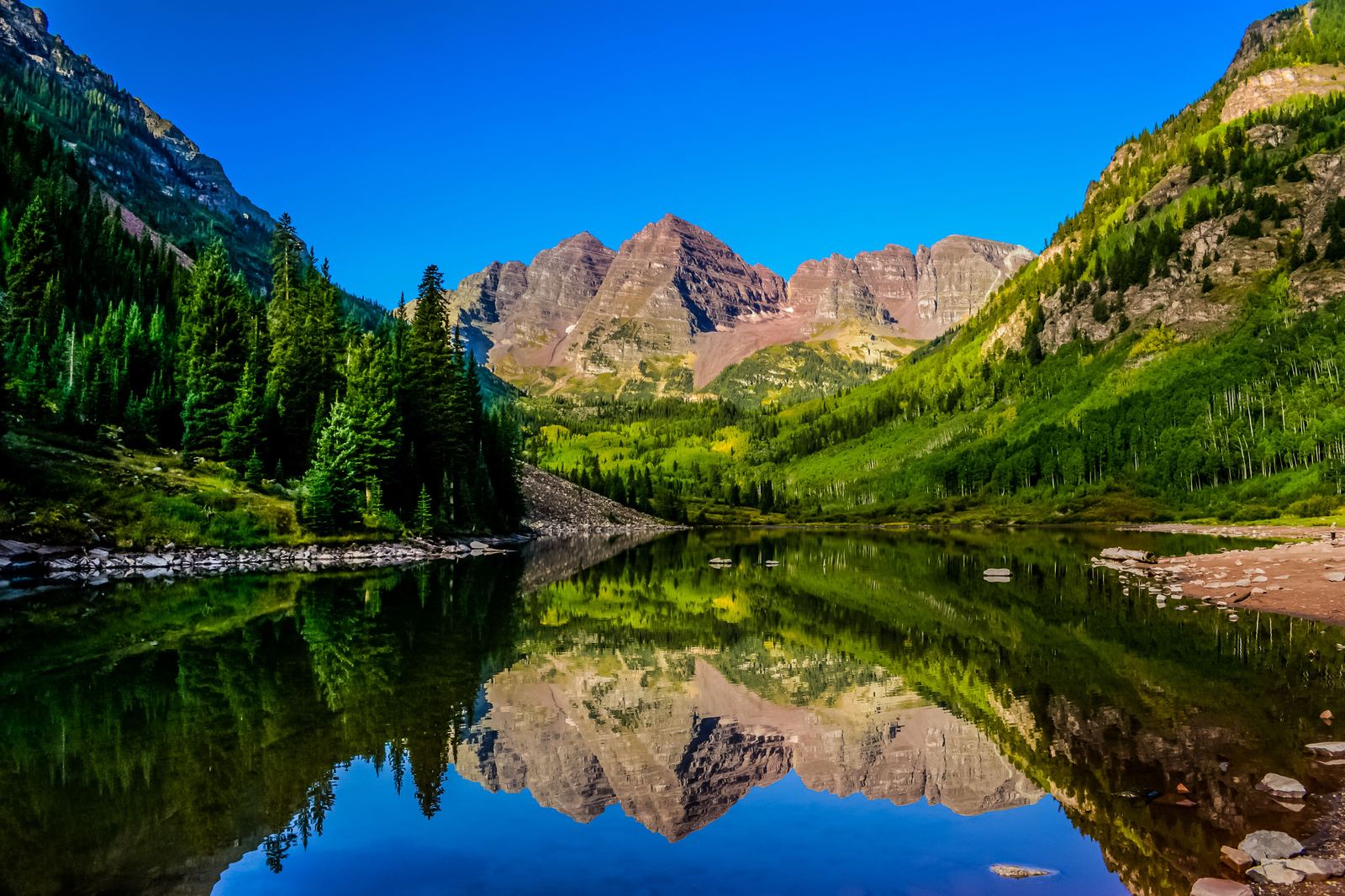
Aspen is the region's most glamorous town, with four ski areas, art galleries, the Aspen Music Festival in summer and a walkable downtown. Its most famous view is the Maroon Bells, two 14,000-foot peaks reflected in Maroon Lake about ten miles from town. In the busy season, personal vehicle access to Maroon Lake is restricted and visitors reserve a shuttle seat or parking slot in advance through the official reservation site. Sunrise in late September, when the aspens turn, is the most sought-after slot of the year.
Snowmass Village, next door, has its own ski area and summer trails. Farther down the Roaring Fork Valley, the small towns of Basalt and Carbondale are quieter bases with good access to the river.
The Arkansas Valley
Buena Vista And Salida: River Towns
South of Leadville, U.S. 24 follows the Arkansas River into Chaffee County, where the Collegiate Peaks, a row of fourteeners named for universities, line the valley. Buena Vista and Salida are relaxed river towns that make good bases for:
- Whitewater rafting, especially through Browns Canyon National Monument, designated in 2015, one of the most-run stretches of whitewater in the country. Licensed outfitters run trips for beginners and families as well as experienced paddlers.
- Hot springs at Mount Princeton and Cottonwood, part of Colorado's Historic Hot Springs Loop. See our hot springs guide.
- Fourteeners including Mount Princeton, Mount Yale and Mount Harvard.
- Historic downtown Salida, one of the state's larger historic districts, with galleries along the river.
Spring runoff peaks in late May and June, which is the most powerful rafting. Late summer flows are gentler.
Planning
High Country Tips
- Plan I-70 around the crowds. Westbound traffic is heaviest on Saturday mornings in ski season and Friday afternoons in summer; eastbound peaks Sunday afternoon. Our companion guide explains Colorado's traction law, which applies on I-70 from September to May.
- Reserve the Maroon Bells early. Shuttle and parking reservations for peak fall dates go fast.
- Bring layers year-round. High-country nights can drop below freezing even in July.
- Respect afternoon storms. On peaks and passes, plan to be below treeline by early afternoon in summer.
Common questions
High Country Questions
When does Independence Pass open and close?
Independence Pass, Colorado Highway 82 between Twin Lakes and Aspen, usually opens in late May and closes in early November, depending on snow. It reaches 12,095 feet. Check CDOT's COtrip site for the current year's dates.
Do you need a reservation for the Maroon Bells?
In the busy season, yes. Personal vehicle access to Maroon Lake is restricted, and visitors reserve shuttle seats or parking in advance through the official Maroon Bells reservation system managed with the White River National Forest.
What is the highest town in Colorado?
Leadville, at 10,152 feet, is the highest incorporated city in the United States. It sits below Mount Elbert, Colorado's highest peak at 14,440 feet.
Sources
- Colorado Department of Transportation: COtrippass status and closures
- U.S. Forest Service, White River National Forest: summer reservationsMaroon Bells and wilderness permits
- Visit Maroon Bellsshuttle and parking reservations
- Bureau of Land Management: Browns Canyon National Monumentmonument information
- National Mining Hall of Fame and MuseumLeadville museum
- Colorado Geological Survey: Colorado fourteenerspeak elevations
- Breckenridge Tourism Officetown information